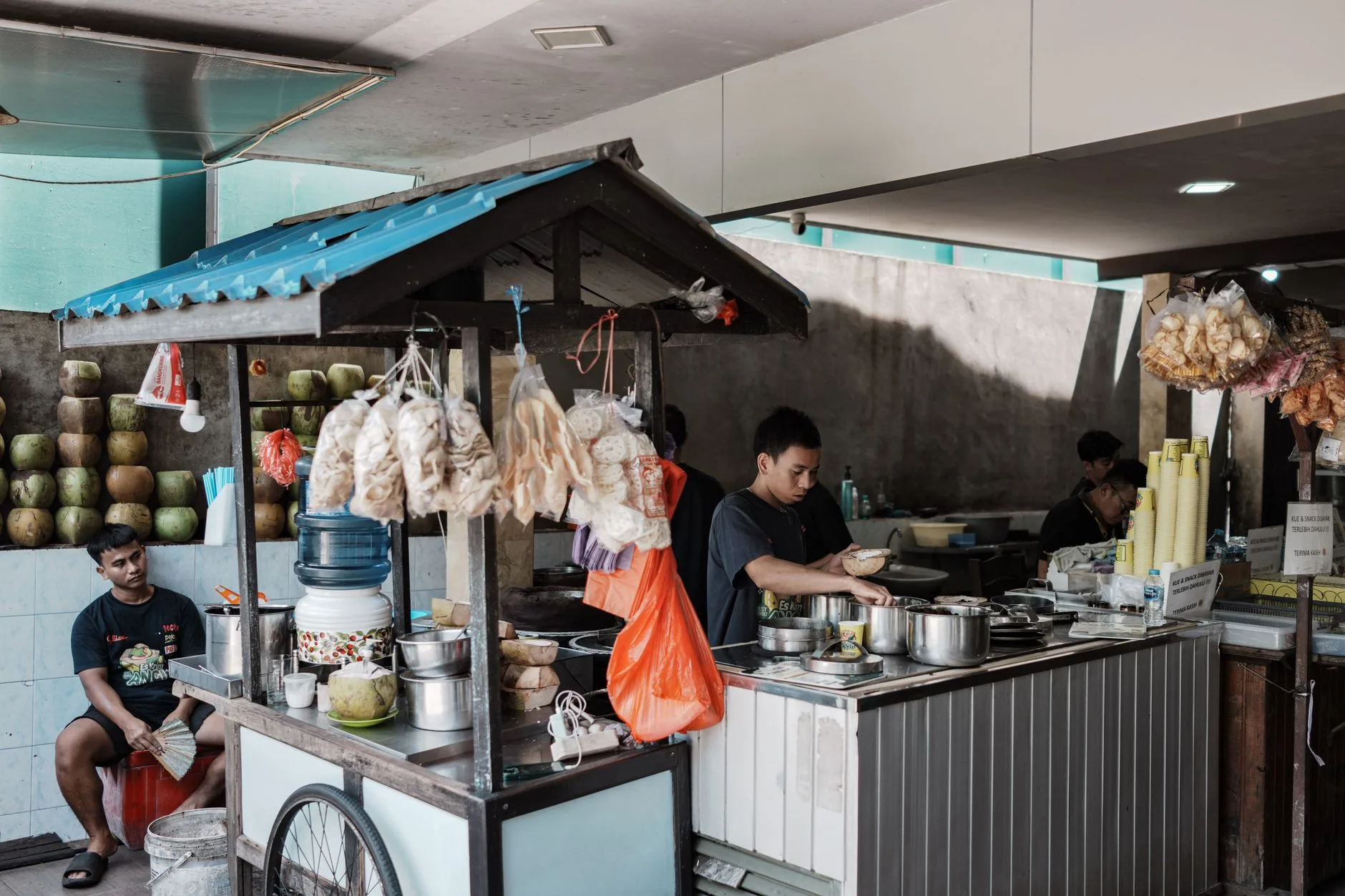
MSEs and Halal Certification: The Question of Commitment and Systems
The halal certification obligation requires MSEs to build a system, not merely complete documents. Commitment and monitoring are the most fragile points.
The first criterion of SJPH demands clear commitment and responsibility. For UMK (micro and small enterprises), this is not merely naming a person, but building a system that endures.
For micro and small enterprises, halal certification is often understood as a final matter: register, get inspected, then receive the certificate. In reality, the heaviest burden lies upstream, in the readiness of the system that must be built beforehand. The first criterion in SJPH (Sistem Jaminan Produk Halal, the Halal Product Assurance System) according to the Decree of the Head of BPJPH (the Halal Product Assurance Agency) Number 57 of 2021 is commitment and responsibility. For UMK, this criterion is a distinctive problem that is rarely discussed.
Kepka BPJPH 57/2021 contains five SJPH criteria: commitment and responsibility, materials, halal product processes, products, and monitoring and evaluation. This decree serves as the primary reference for implementing SJPH on the business actor side and has been amended by Kepka 20/2023.
The commitment and responsibility criterion in practice demands three things. First, a halal policy that is written and known to all workers. Second, the appointment of personnel who run the system, generally a halal supervisor. Third, a mechanism that keeps that commitment alive, not merely a document kept on file.
For large businesses, these three things can be divided among several departments. For UMK managed by an owner together with a few workers, everything rests on the same person.
In UMK, the owner is usually simultaneously the decision-maker on materials, the production supervisor, and the person responsible for administration. When SJPH demands the appointment of a halal supervisor, there is not always someone else who can be appointed. If the owner appoints himself, the question is not the legality of the appointment, but the ability to carry out that function consistently amid daily work.
A halal policy needs to be written. Material records need to be maintained. However, UMK often work with simple records, even without formal record-keeping. Building documentation from scratch demands time that competes with daily production and sales.
When workers change, knowledge about materials and processes is lost along with them. A commitment that attaches only to one person is prone to collapse when that person no longer works there. UMK need a way to ensure the halal policy does not depend on individual memory.
The materials criterion demands clarity of origin. At this point, UMK face critical-point materials whose source determines their status. Some commonly encountered examples:
For UMK, requesting documents from small suppliers or intermediary traders is not easy. Information often stops with the seller, not the producer.
Commitment and responsibility ultimately determine whether the next four criteria can be carried out. Without a clear appointment, no one verifies materials. Without a written policy, there is no basis for rejecting materials of unclear origin. Without monitoring, the system stops after the certificate is issued.
It should be noted that the determination of halal status is the authority of the MUI Fatwa Commission or the Halal Product Fatwa Committee, while the certificate is only issued by BPJPH. Therefore, what business actors can prepare is the system and its evidence, not a halal claim about their own product.
These points are not a one-time job. That is precisely where the problem lies for UMK: commitment must be maintained, not stored away.
The problems of UMK in halal certification do not stop at cost or paperwork. There is a deeper burden, namely building commitment and responsibility that endure despite limited resources. To help organize halal policy, material registry, critical-point marking, and internal audit in one place, IndoHalal.id provides an SJPH platform that can be adapted to the scale of a small business.
The halal certification obligation requires MSEs to build a system, not merely complete documents. Commitment and monitoring are the most fragile points.
The halal certification requirement is already regulated. For UMK, the obstacle that most often arises is actually simple: ingredient documents from suppliers that are hard to trace.
The halal certification requirement obliges UMK (micro and small enterprises) to prepare ingredients, documents, and personnel. The halal declaration scheme helps, but does not remove all burdens.
The first consultation costs nothing. Median reply under 15 minutes during business hours.
Ask certified halal consultants and auditors directly.
Jawaban konsultan bersifat panduan teknis. Penetapan kehalalan produk adalah kewenangan Komisi Fatwa MUI atau Komite Fatwa Produk Halal, dan sertifikat halal hanya diterbitkan oleh BPJPH.