MSEs and Halal Certification: The Question of Commitment and Systems
The halal certification obligation requires MSEs to build a system, not merely complete documents. Commitment and monitoring are the most fragile points.
The halal certification obligation clashes with the limited manpower and record-keeping capacity of micro and small enterprises. This article discusses the sources of the problem and the steps that can be prepared.

The halal certification obligation applies to products that fall within the scope of halal product assurance. For micro and small enterprises, the problem rarely lies in intention or willingness. What often becomes an obstacle is the administrative burden that must be borne alongside daily operations.
This article discusses the sources of these problems, not to frighten, but so that micro and small enterprises (UMK) can prepare themselves gradually.
Law Number 33 of 2014 on Halal Product Assurance is the parent law that regulates the halal certification obligation, the establishment of BPJPH (the Halal Product Assurance Agency), the role of LPH (Halal Inspection Agencies), and the authority of MUI (the Indonesian Ulema Council) in determining the halal status of products.
This regulation has been amended. Law Number 6 of 2023 simplified the certification process, introduced a halal declaration scheme for UMK, and opened the way for the Halal Product Fatwa Committee. At the implementation level, Government Regulation Number 42 of 2024 regulates the procedures for establishing, accrediting, defining the scope of activities, and revoking the approval of LPH, as well as the appointment and dismissal of Halal Auditors.
From the perspective of business actors, the reference for implementing the halal product assurance system is BPJPH Head Decree Number 57 of 2021, which contains five criteria: commitment and responsibility, materials, halal product process, product, and monitoring and evaluation. This decree has been amended by Kepka 20/2023.
These five criteria demand documentation. Commitment needs to be set out in a written policy. Materials need their origin recorded. The process needs to be mapped. Products need to be identified. Monitoring needs to be carried out and proven.
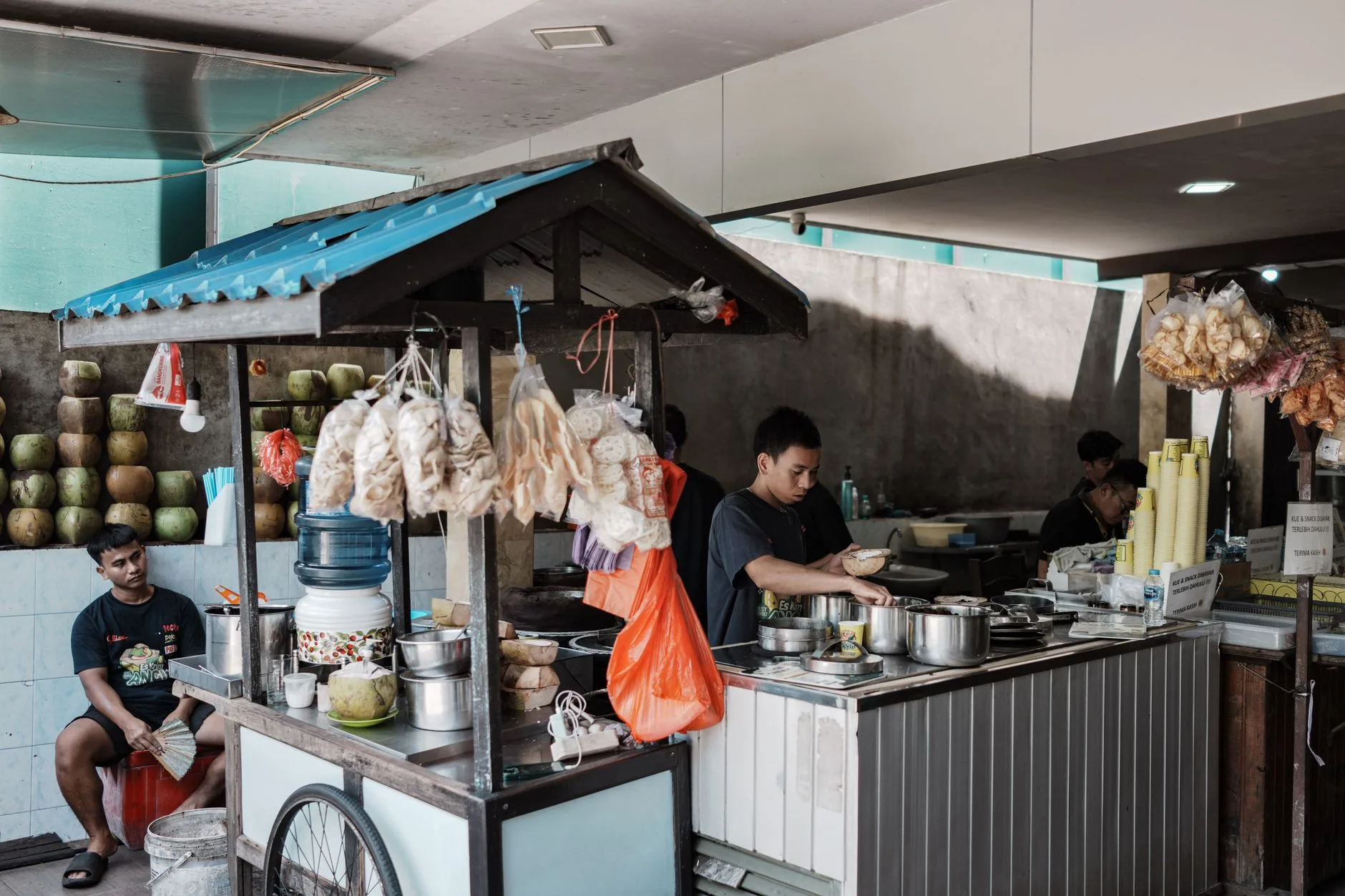
In large companies, this work is usually handled by dedicated personnel. In UMK, everything rests on the business owner, who also handles production, sales, and finance. This is the typical problem that is rarely visible from the outside: not a rejection of the obligation, but a limited capacity to document it.
The material criterion is the part that demands the most thoroughness, because many materials are source-dependent. Some commonly encountered examples:
There are also materials that are generally halal but still need verification. Albumin from egg white generally does not require a substitute, but the label should explicitly state "egg albumin/albumen" so that it is not mixed with non-halal materials. Its uses include bakery products such as meringue and macaron, processed meat, and certain pharmaceutical products.
For UMK, the difficulty arises when suppliers cannot provide information on the origin of materials. Tracing supplier documents takes time and energy, while trade relationships with small suppliers are often not accompanied by orderly documents.
The halal declaration scheme introduced through Law 6/2023 is indeed intended to ease the burden on UMK. However, simplifying the process does not eliminate basic needs: knowledge of the materials used, and the ability to explain the production process.
The separation of duties needs to be noted. The determination of halal status is the authority of the MUI Fatwa Commission or the Halal Product Fatwa Committee, while the certificate is only issued by BPJPH. Therefore, the readiness of UMK does not mean determining halal status on its own, but preparing evidence and information that can be examined.
The problem for UMK in fulfilling the halal certification obligation is essentially a problem of tidiness. The earlier record-keeping becomes a habit, the lighter the process that must be undergone.
If you need help organizing material records and production flow, the UMK Self-Declare Assistance service from IndoHalal.id can help prepare documents for the halal declaration pathway for low-risk micro and small enterprises.
The halal certification obligation requires MSEs to build a system, not merely complete documents. Commitment and monitoring are the most fragile points.
The halal certification requirement is already regulated. For UMK, the obstacle that most often arises is actually simple: ingredient documents from suppliers that are hard to trace.
The halal certification requirement obliges UMK (micro and small enterprises) to prepare ingredients, documents, and personnel. The halal declaration scheme helps, but does not remove all burdens.
The first consultation costs nothing. Median reply under 15 minutes during business hours.
Ask certified halal consultants and auditors directly.
Jawaban konsultan bersifat panduan teknis. Penetapan kehalalan produk adalah kewenangan Komisi Fatwa MUI atau Komite Fatwa Produk Halal, dan sertifikat halal hanya diterbitkan oleh BPJPH.